
Cultured pearls are pearls, not imitation beads. Natural and cultured describe how a pearl forms; freshwater and saltwater describe its environment. Observe lustre, surface, shape and drill-hole condition under diffuse light or magnification, but do not treat one feature as proof. Do not scratch, bite or rub pearls together to authenticate them.
What observation can and cannot establish
This guide covers observations and their limits, rather than certifying a material. Colour, shape, surface appearance and photographs cannot establish identity or treatment on their own. Avoid destructive home tests; uncertainty is a reason to seek professional identification, not to make a stronger claim.
Key Differences Between Real and Fake Freshwater Pearls
1. Luster and Depth
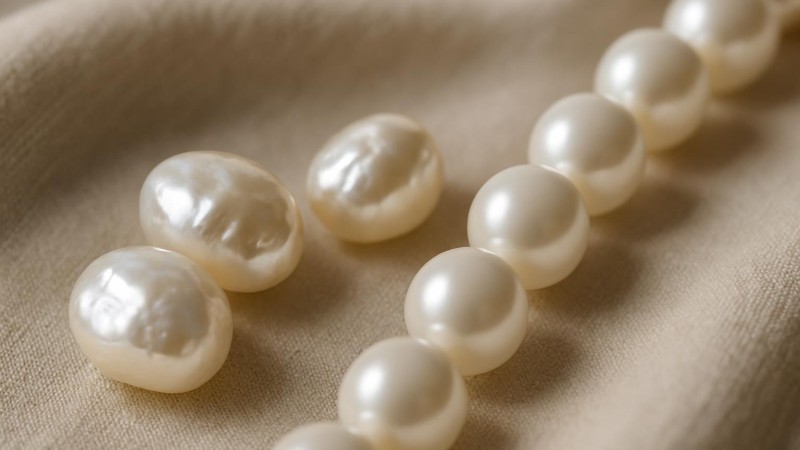
Compare lustre and surface in steady, diffuse light. Reflections alone do not distinguish cultured pearls from good imitations.
2. Shape and Size Variations
Round and irregular shapes both occur in pearls. Uniformity or a matching strand does not establish authenticity.
3. Drill Holes
Look for wear or coating damage around existing holes without inserting tools. Record the observation, not a final identification.
Leave a Comment