
Before buying, ask for a written description of the material, any disclosed treatments and the exact item or lot supplied. If a report is offered, check that it matches the item and read what was actually examined. An unanswered question remains unknown; a photograph or a general product label is not a laboratory report.
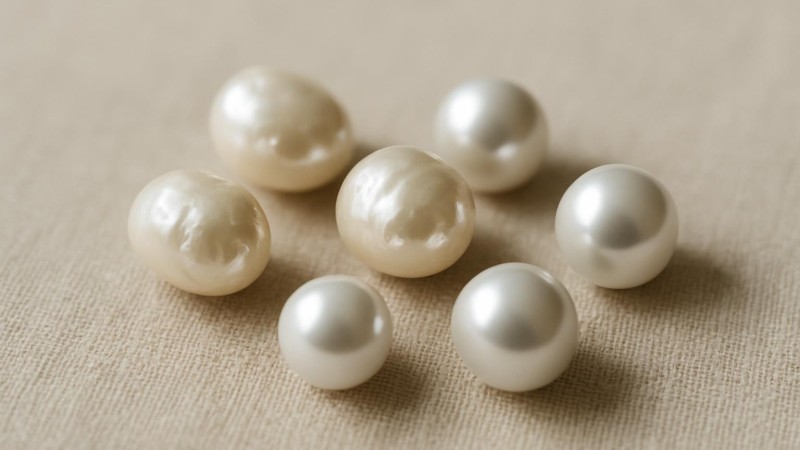
Cultured pearls are pearls, not imitation beads. Natural and cultured describe how a pearl forms; freshwater and saltwater describe its environment. Observe lustre, surface, shape and drill-hole condition under diffuse light or magnification, but do not treat one feature as proof. Do not scratch, bite or rub pearls together to authenticate them.
Professional Evaluation
A qualified gemmologist can select appropriate non-destructive laboratory examinations. Ask what the resulting report establishes, including any limits; do not substitute a home test for that evidence.
Common Types of Fake Pearls
There are several types of imitation pearls on the market. Understanding these can help you spot fakes more easily:
- Glass pearls: Made by coating glass beads with a pearlescent substance. They are heavier than plastic but lack the soft luster of real pearls.
- Plastic pearls: Lightweight and inexpensive, often used in costume jewelry. Their coating can wear off over time.
- Shell pearls: Created from crushed shell material and coated with a pearly finish. They have a more convincing texture but are still not genuine pearls.
Leave a Comment